

Self-Regulation for Neurodivergent, Sensitive Anxious Children: A Three-Part Workshop Series
If you’ve ever wondered how to truly help your sensitive, anxious, or neurodivergent child — you’re in the right place.
This workshop series gives you a clear understanding of your child’s inner world and practical strategies that actually work in real life. With over three hours of expert guidance and parent-friendly resources, you’ll feel more prepared, more grounded, and more connected to your child than ever.

Part 1: Foundations of Self-Regulation
Understand what self-regulation really is — and isn’t. In this module, you’ll explore how the nervous system shapes behaviour, what dysregulation looks like, and how sensitivity, anxiety, and neurodiversity influence your child’s capacity to stay calm and connected. You’ll learn the core principles of the window of tolerance and begin to recognise your child’s unique signs of regulation and stress.
-
Understand how children learn to manage their emotions, behaviour, and energy through supportive relationships and environments.
Defining Self-Regulation — What it really means beyond “self-control.”
A Bio–Psycho–Social Model of Self-Regulation — How the brain, body, and relationships shape a child’s capacity to regulate.
Understanding What It’s Not — Differentiating self-regulation from obedience, compliance, and behaviour management.
-
Explore the science of safety and stress through a process-based, neurobiological lens.
Window of Tolerance — Recognising when your child is in, above, or below their zone of optimal regulation.
Polyvagal Theory — How the nervous system detects safety, threat, and shutdown.
Hyperarousal & Hypoarousal in Children — What these states look like and how to respond supportively.
-
Learn how regulation looks different across neurotypes and why a one-size-fits-all approach doesn’t work.
Neuroaffirming Neurodivergence — Understanding and celebrating the diverse ways brains process and respond to the world.
Understanding Differences — Exploring sensory, cognitive, and emotional regulation differences in Autistic and ADHD children.
Common Challenges — Supporting regulation, flexibility, and recovery when the world feels too much (or not enough).

Part 2: A Self-Regulation Model
In this signature module, you’ll learn my integrative model for self-regulation — a clear, visual framework linking the principles of Safety, Connection, and Awareness. You’ll see how these processes work together to support your child’s growth, and how to integrate practical strategies that nurture regulation from the inside out. This module bridges understanding with action.
-
Explore the core processes that underpin every child’s ability to feel safe, calm, and connected.
The role of safety in the brain and body
How connection builds regulation through relationship
Awareness as the bridge between emotion and behaviour
-
A step-by-step framework for recognising and supporting your child’s regulation needs.
Spotting early cues of dysregulation
Guiding your child back into their window of tolerance
Using co-regulation and sensory strategies at each stage
-
Learn how to apply this model in everyday parenting moments.
Turning insight into responsive action
Repairing after disconnection or overwhelm
Building your own process-based regulation plan

Part 3: Practical Tools and Everyday Integration
Turn insight into action with concrete strategies you can use immediately. This module introduces a memorable acronym to guide your responses during moments of dysregulation, challenging behaviour, or disconnection — including boundary-setting, repairing ruptures, and supporting your child’s emotional state. You’ll receive fridge-friendly cheat sheets, real-life examples, and be guided step-by-step to build your child’s personalised self-regulation plan for home and school. By the end, you’ll have practical tools and a structured plan that integrate your child’s needs with your own regulation and consistency.
-
Understand the metaphor that ties the whole series together — moving from chaos or shutdown back to safety and relationship.
What the Bridge represents in self-regulation
Recognising when your child has “fallen off” the bridge
The parent’s role as the steady structure of support
-
Learn and apply a simple acronym to guide your responses during challenging moments.
Step-by-step guidance through the acronym process
Using it for boundary setting, repairs, and reconnection
Applying it consistently to build emotional safety and trust
-
Bring everything together into a practical, visual plan for home and school.
Completing your Self-Regulation Plan Template (with PDF prompts)
Creating fridge cheat sheets and visual reminders
Reflecting on progress and celebrating small shifts
Beautiful, Helpful Resources — To Keep
-
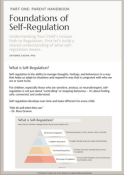
Foundations of Self-Regulation Handbook 1
-
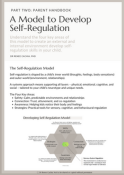
A Model to Develop Self-Regulation Handbook 2
-
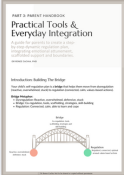
Practical Tools + Everyday Integration Handbook 3
-
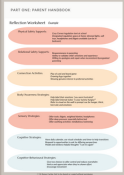
Regulation Plans + Strategies & Boundary Setting Guides
Workshop Details
-
This workshop is designed for parents and caregivers supporting children who experience emotional sensitivity, anxiety, or neurodivergence (including Autism and ADHD). Whether you’re navigating meltdowns, shutdowns, or daily dysregulation, you’ll gain insight into what’s happening beneath the behaviour and learn how to respond with confidence and care.
Please note many of the strategies and education are also relevant to children younger and older, thus will be helpful for siblings too.
-
Your purchase includes 12 months’ access to all content and resources.
You’ll receive:3 workshop video presentations — each 75 minutes (over 3.5 hours of total video content)
3 parent handbooks — one for each module, with key concepts, reflection questions, and visual summaries
Bonus cheat sheets — including practical visuals, and quick-reference tools
This is a self-paced, on-demand learning experience designed to fit into your life and evolve with your child.
-
The earlybird workshop investment is $199 AUD with 12 months access.
-
This workshop is neuroaffirming and neurodivergent-friendly. All examples, strategies, and language reflect respect for neurodiversity and an understanding of individual differences. You do not need a ‘diagnosis’ to take part in this workshop.
-
This workshop is educational in nature and not a therapeutic service. Participation does not establish a psychologist–client relationship with Dr Renee Cachia.
It is designed to enhance self-awareness and parenting insight, and is not a replacement for individual therapy or professional advice.If you are a current or former client, your participation is independent of your therapeutic services and will not affect your existing or future care in any way.
-
Unfortunately refunds are not permitted after workshop purchase as you will receive instant access to the resources.
-
This workshop is priced below the NDIS rate of $70.58 per hour for Capacity Building: Parent and Carer Training (15_038_0117_1_3) and can be claimed on eligible plans. Recent NDIS updates regarding general parenting programs do not apply here, as this workshop may be considered “disability-specific”. If you’re unsure, it’s always best to confirm with your NDIS planner or agency to confirm if you can claim this parent training through your NDIS plan.