
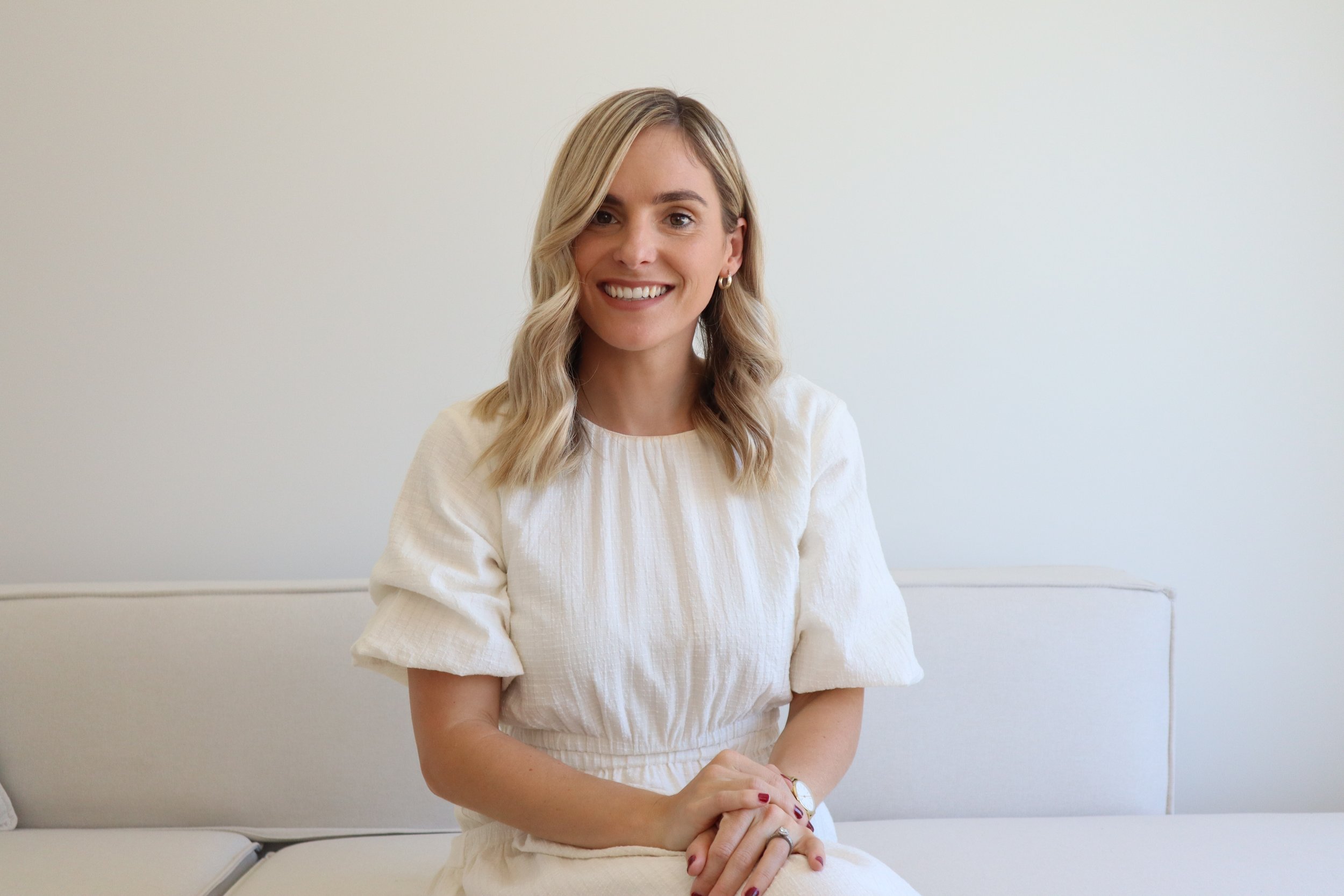
Meet Renee
Author, Principal Psychologist & PhD
Dr. Renee Cachia is a Principal Psychologist with over a decade of experience in parent-child dynamics, neurodivergence, stress, trauma, and the healing potential of nervous system regulation. She has worked with thousands of individuals in clinical practice including children, adolescents and adults/parents.
Since 2014, her research has focused on how these factors intersect, and how mindfulness-based therapies, attachment theory, emotionally attuned parenting, Acceptance and Commitment Therapy (ACT) and Polyvagal Theory can foster emotional resilience and healing in both children and parents. She is also developing a clinical interest in the healing potential of psychedelic therapy for the parent-child lineage.
A proud Monash University alumna, Renee holds a PhD, a Masters, and four degrees in psychology. Her doctoral research, which has received international recognition, is cited in over 700 peer-reviewed journal articles. She is also the author of Parenting Freedom, an Amazon bestseller, and has published numerous academic journal articles and a book chapter.
Renee’s mission is to provide practical, research-based tools to support families in creating emotionally attuned, healing environments for the parent and the child. She has long advocated that parent’s must be a central aspect of the therapy room. Through her workshop series’, she shares her knowledge in a hands-on, accessible way, helping parents navigate complex challenges and build deeper connections with themselves and their children.
Her work is rooted in both academic expertise and lived experience as a mother of two, and she is passionate about empowering parents to raise emotionally resilient children through mindful, compassionate parenting practices. Renee has a long-term personal passion for practicing yoga, meditation and contemplative practices, living and breathing the name of this practice that advocates that everyone would benefit from an Inner Practice.
Published Work Portfolio
-
Renee has appeared on many podcasts over the years. Here are some recent ones:
Renee Cachia on Dropping The Needless Woman Archetype, Life After Birth With Yara Heary
Human Potential Over Diagnosis w/ Dr Renee Cachia, Well Hello Anxiety by Jodi Richardson
Dr Renee Cachia on Nurturing Parents, A Grateful Life with Dr Lauren Tober
“We hurt where we care. We care where we hurt” - An Interview With Dr Renee Cachia, re.love with Dr Ezzie Spencer
Cultivating Parenting Freedom with Mindfulness, Wisdom for Wellbeing with Dr Kaitlin Harkess
Compassionate Parenting with Dr Renee Cachia, Her Earth Medicine
-
Published Citations: over 700 citations in published peer-reviewed academic research, in addition to Maggie Dent’s 2022 book, Girlhood: Raising our little girls to be healthy, happy and heard. ABC Books.
Cachia, R. L. 2021. Parenting Freedom: From Stress and Depletion to Connectedness and Meaning. Lioncress Publishing.
Cachia, R. L. 2017. Mindfulness and Autism Spectrum Disorder. Autism - Paradigms and Clinical Application. InTech. doi: 10.5772/65394
Cachia, R. L., Anderson, A., & Moore, D. W. (2016). Mindfulness in Individuals with Autism Spectrum Disorder: A Systematic Review and Narrative Analysis. Review Journal of Autism and Developmental Disorders, 1-14. doi: 10.1007/s40489-016-0074-0
Cachia, R. L., Anderson, A., & Moore, D. W. (2016). Mindfulness, Stress and Well-Being in Parents of Children with Autism Spectrum Disorder: A Systematic Review. Journal of Child and Family Studies, 25(1), 1-14. doi: 10.1007/s10826-015-0193-8
Hendrikse, J. J., Cachia, R. L., Kothe, E. J., McPhie, S., Skouteris, H., & Hayden, M. J. (2015). Response to ‘Obesogenic’ oversimplification. Obesity Reviews, 16(8), 704-705.
Hendrikse, J. J., Cachia, R. L., Kothe, E. J., McPhie, S., Skouteris, H., & Hayden, M. J. Attentional biases for food cues in overweight and obese individuals: A systematic review of the literature. Obesity Reviews, 16, 424–432. doi: 10.1111/obr.12265
-
Dr Renee has recently developed & facilitated workshops on the following topics:
Teach Your Child to Self-Advocate: How to Help Your Child Find Their Voice
Professional Learning for Life Education Educators: Neuroaffirming Practices and Educator Adaptability for Varying Learning Abilities and Neurodiversity
Attuned Parenting: Support your Child's Self-Regulation, Psychological Resilience and Wellbeing
Navigating Dysregulation: Supporting Families to Navigate Neurodivergence and Dysregulation through the Key Developmental Ages and Stages
School Can’t: A Guide for Parents
Supporting Young People with ADHD: A Parent Workshop
Coping With Change: Navigating Busy Periods, Routine Changes and Long School Holidays with Grace
Becoming Unstuck in Parenting: Building Emotional Resilience in Young People
Mindful Parenting: To Foster Empathy, Flexibility, Emotion-Regulation, Communication & Boundary Setting
Mindful Parenting: An 8-Week Curriculum Designed for Parents of Autistic Children (2017)
Renee has also presented at several international academic conferences on her work on Mindful Parenting & Neurodivergence, including
World Congress of Behavioural and Cognitive Therapies (WCBCT), Melbourne
Association for Behaviour Analysis International (ABAI) Conference, Paris & Chicago
New Zealand Association for Behaviour Analysis Conference, Christchurch
Claremont Autism Research Centre, California
Australian and New Zealand Obesity Society Conference, Melbourne
Behavioural Intervention Association Conference, Melbourne
Aspect Autism in Education, Melbourne
My Approach.
If you work with the child, you must work with the parent too. All children and parents are housed within their own unique parent-child dynamic, within an eco-system of environmental, systemic, intergenerational, social, bio-physiological and personal factors. This speaks to their unique developmental and psychological histories, and their unique nervous (regulation) system and neurotype. A truly holistic and integrative approach must address the wider environment around a child as well as individualised psychological support.
-
Parents are the most influential, and important people in a child’s life.
-
We must always consider core needs and what is beneath behaviours.
-
We are human beings with unique histories and ‘parts’ not syndromes in a box. Our environments impact us.
We are always in a process towards change. With the right support, we can always re-direct in a more valued and desired direction
-
We can improve ‘resilience’ by improving our environment and expand out window of tolerance.
-
Our psychological struggles have often been imprinted by our histories - and we all have one.
It shows up in our parenting, in our self-esteem, and in every area of our lives.
It underpins our self-regulation, how we understand our nervous system, how we cope and view the world.
We can learn to relate to our parts differently in order to move towards our rich and meaningful life.